
Why New Year’s Resolutions Fail—and How to Make This Year Different
Every January, millions of people make the same quiet promise:
This will be the year I finally change.
Eat better. Exercise more. Be more present. Get organized. Work less. Achieve more.
And by February—sometimes sooner—most of those resolutions are gone.
This isn’t because people lack discipline or motivation. It’s because most resolutions are built on a faulty foundation.
Why New Year’s Resolutions Commonly Fail
1. They focus on outcomes, not behavior
“I want to lose 20 pounds.”
“I want to be less stressed.”
“I want to be more productive.”
These are outcomes, not actions. Outcomes feel inspiring, but they don’t tell your brain what to do on a Tuesday afternoon when motivation is low.
Behavior changes happen through repeatable actions, not distant goals.
2. They rely on motivation instead of systems
Motivation is emotional and temporary. Systems are practical and repeatable.
When your plan depends on “feeling like it,” it will eventually collapse under fatigue, stress, or a busy week.
3. They ignore how life actually works
Most resolutions assume ideal conditions:
Plenty of time
Low stress
High energy
Few interruptions
Real life doesn’t cooperate. Without accounting for busy weeks, setbacks, and competing priorities, even good intentions fall apart.
4. They try to change too much at once
Radical overhauls feel exciting—but they overload your attention and willpower. When everything changes, nothing sticks.
Consistency beats intensity every time.
How to Make Resolutions Stick This Time
The goal isn’t to aim lower. It’s to aim smarter.
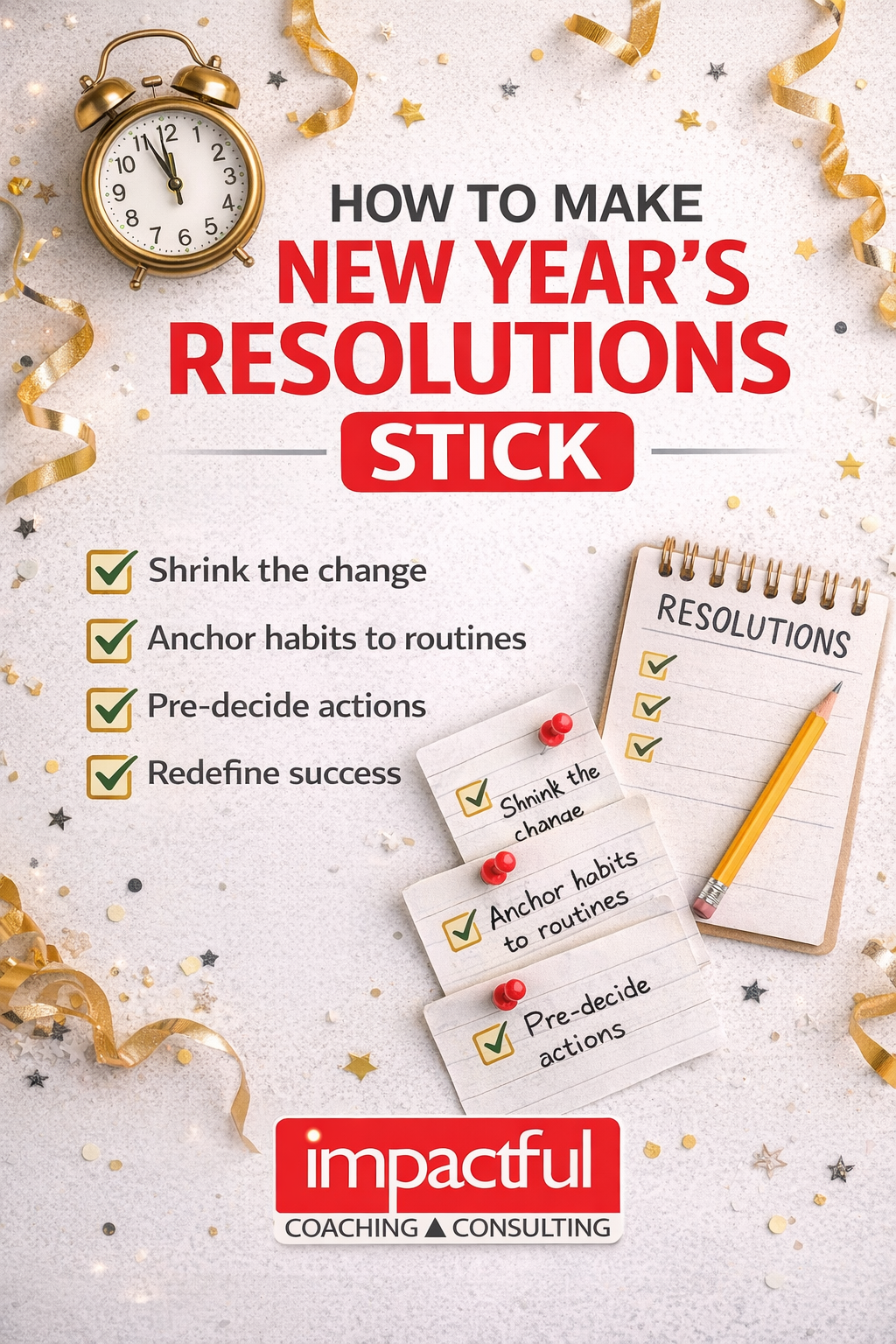
1. Shrink the change
Ask: “What is the smallest version of this habit I could do consistently?”
Not: “Exercise every day”
But: “Walk for 10 minutes after lunch”
Small habits reduce friction—and friction is what kills follow-through.
2. Anchor habits to existing routines
Instead of adding something new, attach it to something you already do.
Stretch after brushing your teeth
Review priorities right after opening your laptop
Journal for five minutes before bed
Existing routines act as reminders and make habits automatic.
3. Decide in advance, not in the moment
Most failures happen at the decision point.
Pre-decide:
When will I do this?
Where will I do this?
What will I do if the day goes sideways?
Clarity reduces mental resistance.
4. Track behavior, not perfection
You don’t need streaks. You need awareness.
Track: “Did I show up today?”
Not: “Did I do it perfectly?”
Progress compounds when you focus on showing up more often than not.
5. Redefine success
Success is not never missing a day.
Success is returning quickly after a miss.
The people who succeed aren’t more disciplined—they recover faster.
A Better Question to Ask This Year
Instead of: “What do I want to achieve this year?”
Ask: “Who do I want to become—and what does that person do regularly?”
Identity-driven habits last longer than goal-driven resolutions.
This year doesn’t need a dramatic reset.
It needs a few intentional shifts done consistently.
And that’s something you can absolutely sustain.
P.S. If you’d like to learn more about an in-depth full-day productivity training session I’ll be delivering in Brooklyn, NY on January 14, click here.