

Posts tagged workplace culture
"You Hide It Well": What My Networking Group Taught Me About Introverts, Extroverts, and Everything In Between

Last week, our networking group ran ahead of schedule. Everyone had given their one-minute pitch, and instead of sitting in dead air, I picked up the mic and started riffing on networking, branding, and differentiation. Somewhere in there, I mentioned that I'm an introvert — and that I still show up with energy and actively seek out connection.

Afterward, someone pulled me aside. "If you're an introvert," he said, "you hide it very well."

He meant it as a compliment. But it stuck with me, because it revealed something most people get wrong: the idea that introversion and extroversion are costumes you either wear well or don't. They're not. They're wiring. And once you understand how that wiring actually works, you stop mistaking performance for personality — in yourself and in everyone you lead.

Read More
Stop Seeking Approval

Some of the most stressed, overworked leaders I've ever met aren't struggling because of their workload. They're drowning because of something far more invisible — and far more exhausting.

Every decision they make runs through a filter. Before they send the email, before they make the call, before they set the direction — there's a quiet, relentless question running in the background: What will people think of me?

If that’s you, it’s costing you more than you realize. It's costing you clarity. It's costing you speed. And most of all, it's costing you your confidence as a leader.

Read More
Can Leadership Presence Be Taught—Or Are You Born With It?

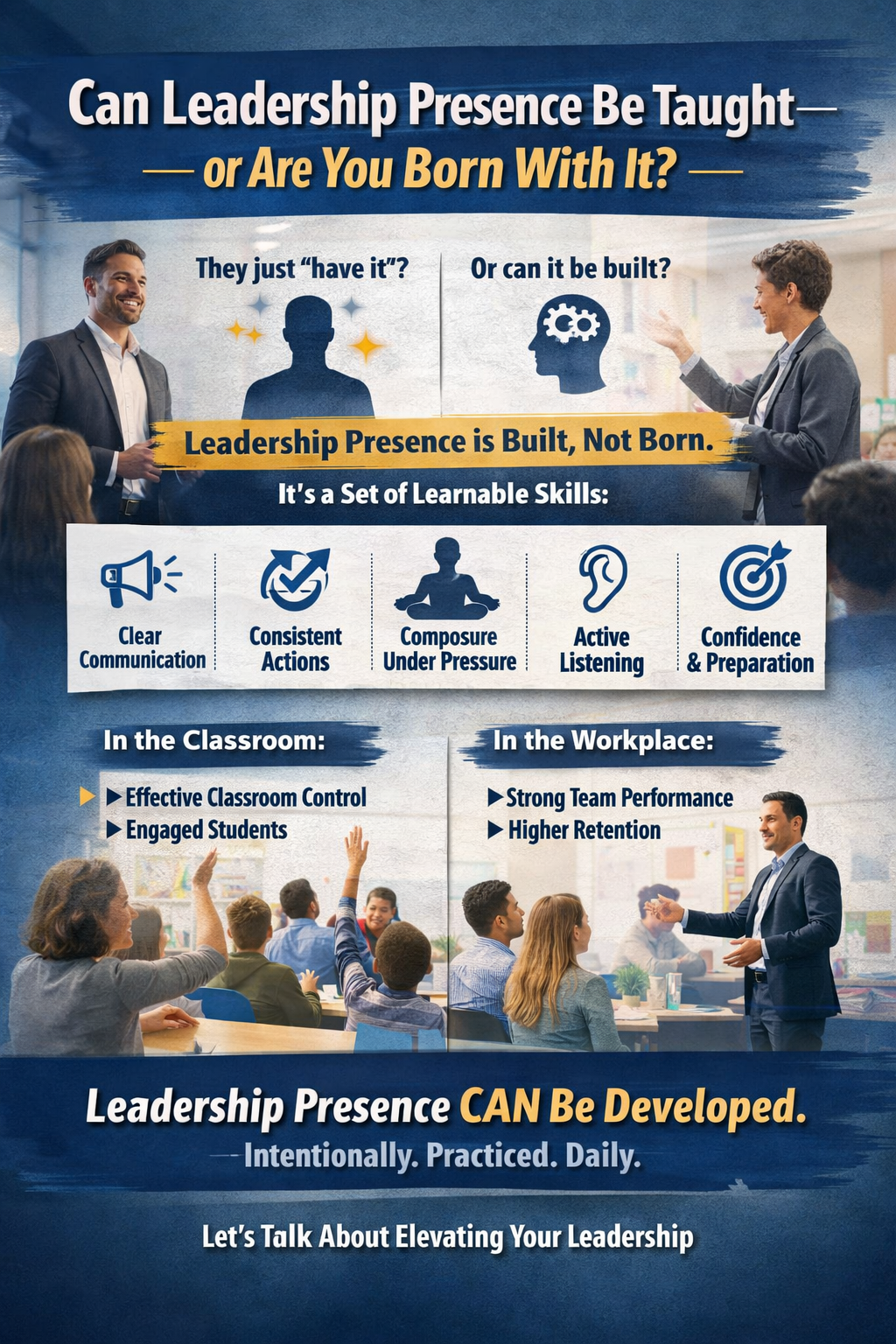
Can leadership presence be taught… or is it something you either have—or you don’t?

It’s a question that comes up often in my work with leaders across industries—and even more so in education.

Because when you see someone with strong leadership presence, it feels almost intangible. They walk into a room and command attention without demanding it. They communicate clearly. They create alignment. People listen—and more importantly, people respond.

It looks natural. Effortless. Like something they were born with.

But that assumption is wrong.

Read More