

Posts in communication
"You Hide It Well": What My Networking Group Taught Me About Introverts, Extroverts, and Everything In Between

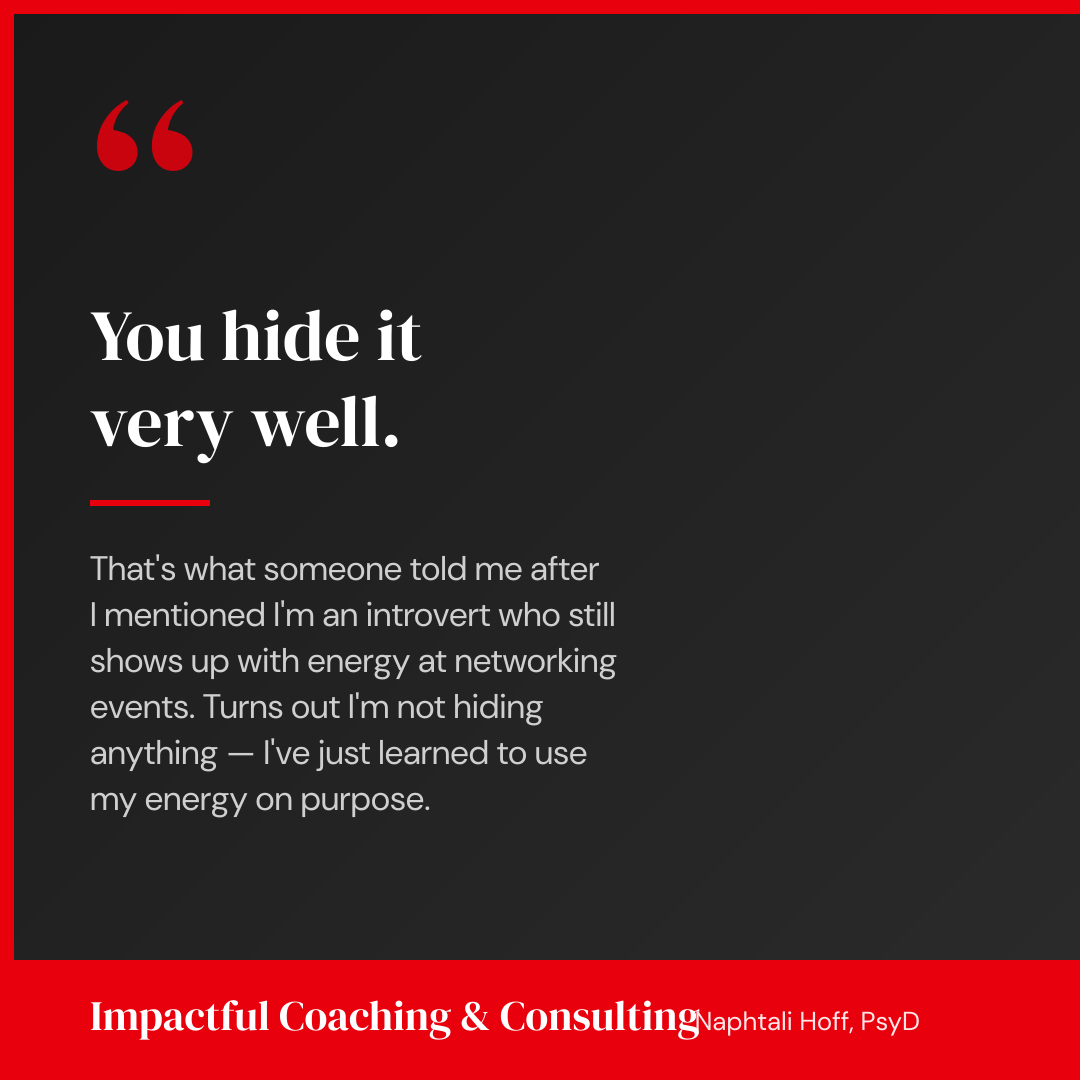
Last week, our networking group ran ahead of schedule. Everyone had given their one-minute pitch, and instead of sitting in dead air, I picked up the mic and started riffing on networking, branding, and differentiation. Somewhere in there, I mentioned that I'm an introvert — and that I still show up with energy and actively seek out connection.

Afterward, someone pulled me aside. "If you're an introvert," he said, "you hide it very well."

He meant it as a compliment. But it stuck with me, because it revealed something most people get wrong: the idea that introversion and extroversion are costumes you either wear well or don't. They're not. They're wiring. And once you understand how that wiring actually works, you stop mistaking performance for personality — in yourself and in everyone you lead.

Read More


The Conversation You’ve Been Avoiding is Costing You

“Everything seemed fine… until it wasn’t.”

That’s how a COO described a conflict that blindsided his leadership team. Two high performers. One missed expectation. Weeks of quiet frustration. And then a blowup in a meeting that stalled an entire project and shook trust across departments.

The problem wasn’t talent. It wasn’t effort. It was communication — or rather, the lack of it.

Read More
Prevent Problems Before They Start

“Everything was fine… until it wasn’t.”

That’s how a COO described the conflict that blindsided his leadership team. Two top performers. One missed expectation. Weeks of quiet frustration. Then a blowup in a meeting that stalled an entire project and damaged trust across departments.

What went wrong wasn’t competence.
It was communication.

Read More
How to Have Difficult Conversations

Difficult conversations are an inevitable part of life—at work, at home, and in relationships. Whether you’re delivering tough feedback, addressing a conflict, or navigating a sensitive topic, the ability to have hard conversations with clarity and compassion is a critical skill. Unfortunately, many people either avoid these moments altogether or approach them in ways that cause unnecessary tension or damage.

Read More
Why the Best Leaders are Great Communicators

When we think about the best leaders we've encountered, a common trait often stands out: they're all great communicators. Whether it's inspiring a team, guiding a company through change, or fostering innovation, effective communication is at the heart of successful leadership. In this article, we'll dive into why great leaders excel at communication and how it boosts productivity and success within an organization.

Read More
Mastering Mindset: Leveraging Mental Frameworks for Setting and Achieving Process Goals

As we pursue of our aspirations, whether personal or professional, setting goals is often the first step towards progress. However, while outcome goals define the destination, it's the process goals that pave the way towards achievement. Process goals focus on the journey, the steps, and the habits necessary to reach our desired outcomes. Yet, setting and achieving these goals isn't solely about creating a to-do list; it's about cultivating the right mindset to navigate challenges, setbacks, and successes along the way.

Read More
Navigating change: The essence of adaptive leadership

The ability to navigate uncertainty and lead through change has become paramount in today’s ever-evolving landscape. Adaptive leadership, a concept introduced by Ronald Heifetz and Marty Linsky, emphasizes the importance of agile, flexible and proactive leaders in addressing complex challenges. This leadership style is not about having all the answers but empowering teams to adapt, innovate and thrive amidst constant change.

Let’s explore some real-life leadership challenges and scenarios to help us better understand what adaptive leadership looks like in practice.

Read More
When not to email

As head of school, I would have my assistant head of school read sensitive emails that I was planning on sending.

As time went on, I would stop sending such emails entirely, and insist on face-to-face meetings.

That's because we do a terrible job of accurately reading intent when it comes to things like email.

We lose sight of tonality. We lose sight of intent.

Read More