
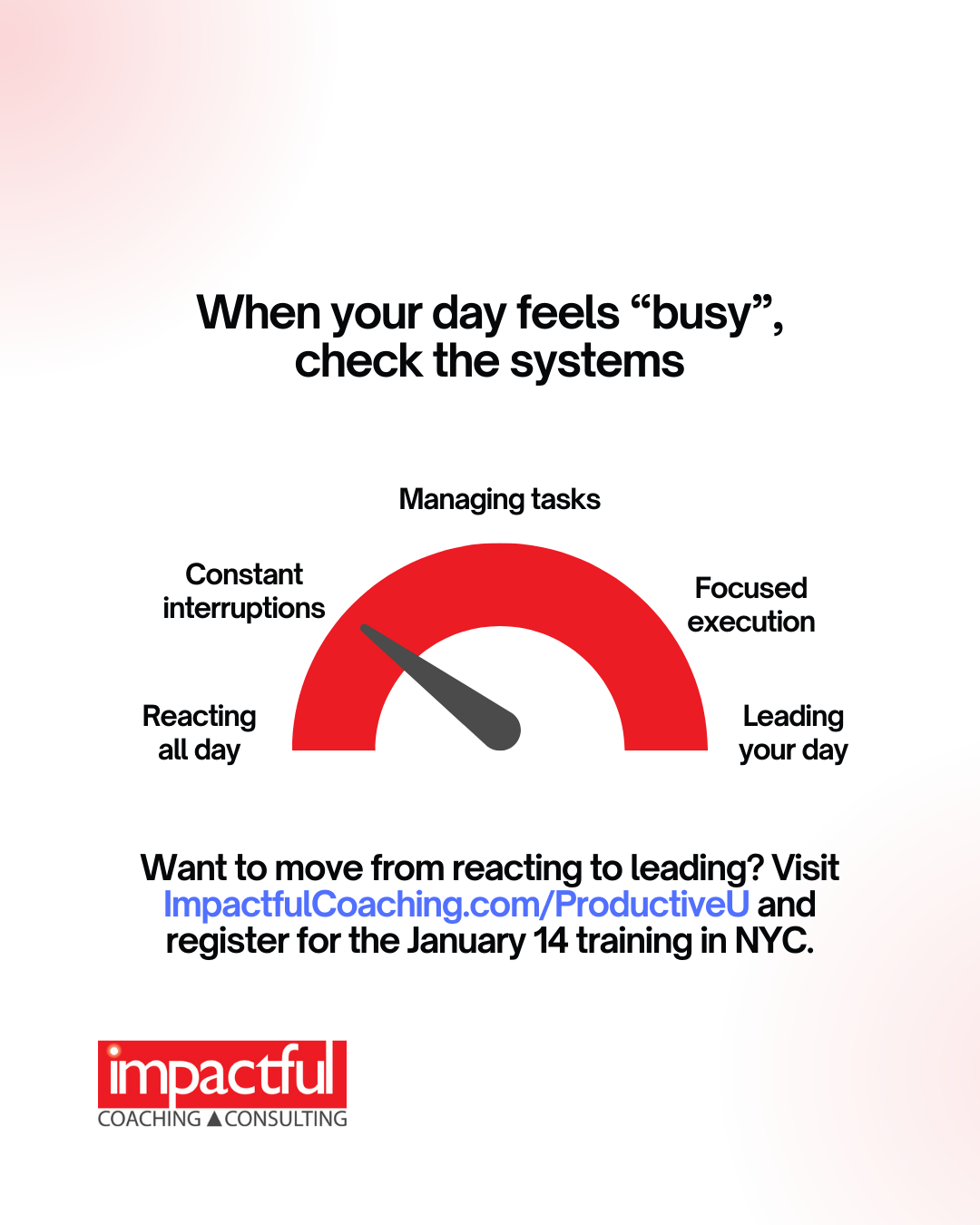
Real Productivity vs. Looking Busy

A few years ago, I was sitting across from a school leader who looked completely spent.

He told me, almost proudly, “I’m working from 7 a.m. until 10 p.m. most days. I don’t stop moving.”

There was a pause. Then he added something quieter.

“I just don’t feel like I’m actually getting ahead.”

That sentence has stayed with me, because it names a tension so many leaders experience but rarely say out loud. We are constantly doing things, yet we’re not always making progress on the things that matter most.

This is the difference between real productivity and perceived productivity.

Read More
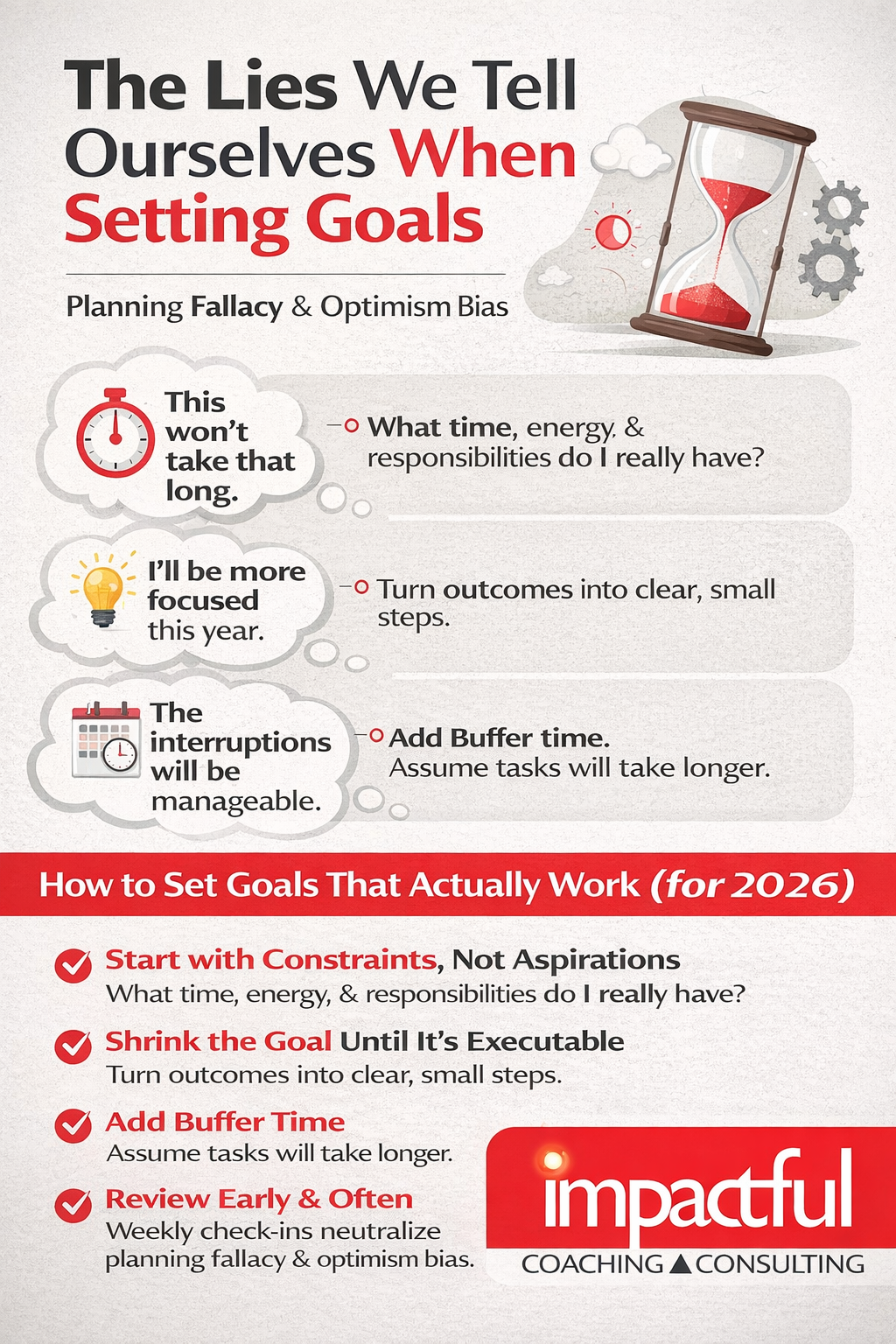
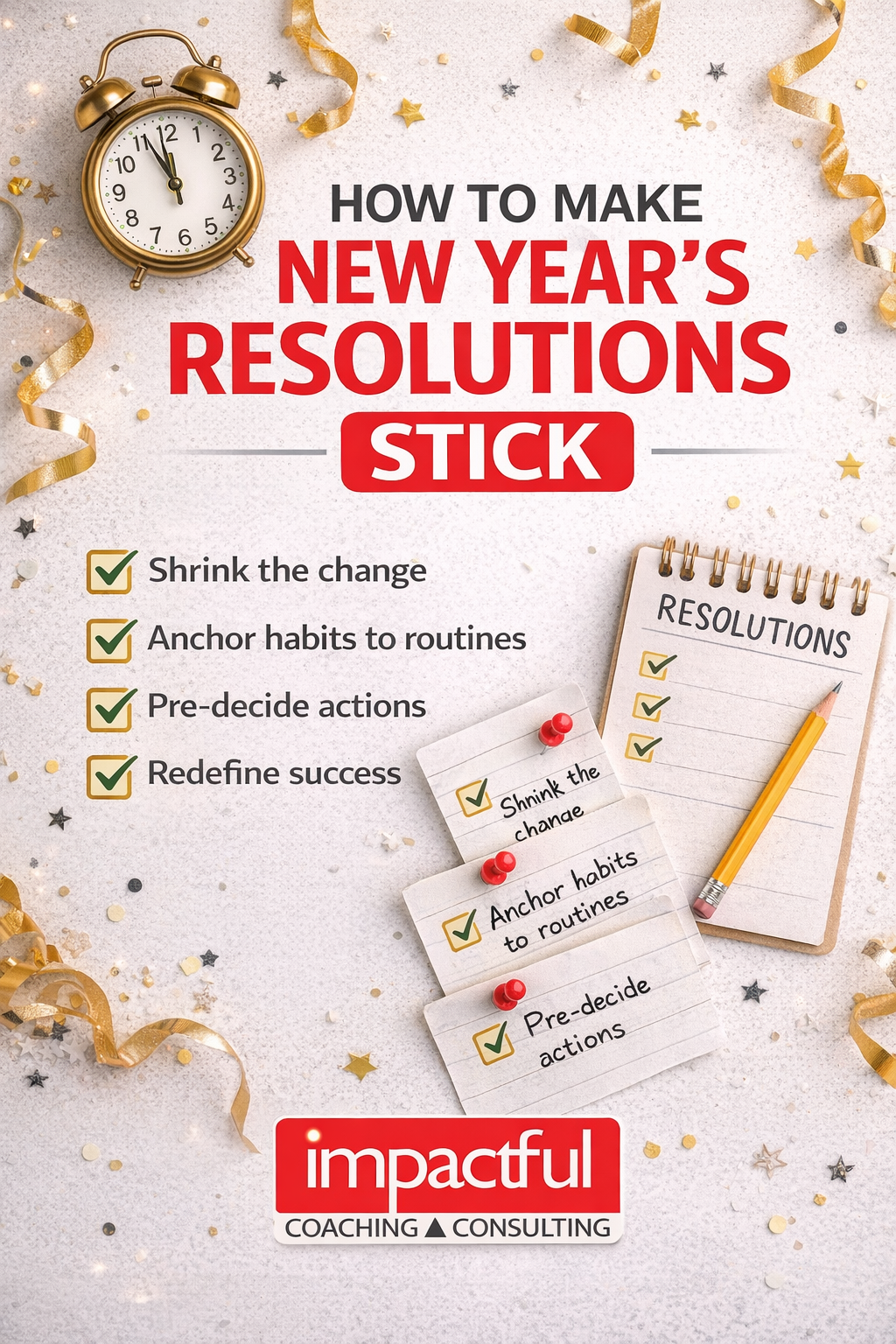
The Lies We Tell Ourselves When Setting Goals

When we set goals, our brains tell us comforting stories.

This won’t take that long.
I’ll be more focused this year.
The interruptions will be manageable.

These thoughts feel harmless—even motivating. But they aren’t neutral. They are the product of two powerful cognitive biases that quietly undermine our goals before we ever begin: the planning fallacy and optimism bias.

Read More
Why New Year’s Resolutions Fail—and How to Make This Year Different

Every January, millions of people make the same quiet promise:

This will be the year I finally change.

Eat better. Exercise more. Be more present. Get organized. Work less. Achieve more.

And by February—sometimes sooner—most of those resolutions are gone.

This isn’t because people lack discipline or motivation. It’s because most resolutions are built on a faulty foundation.

Read More
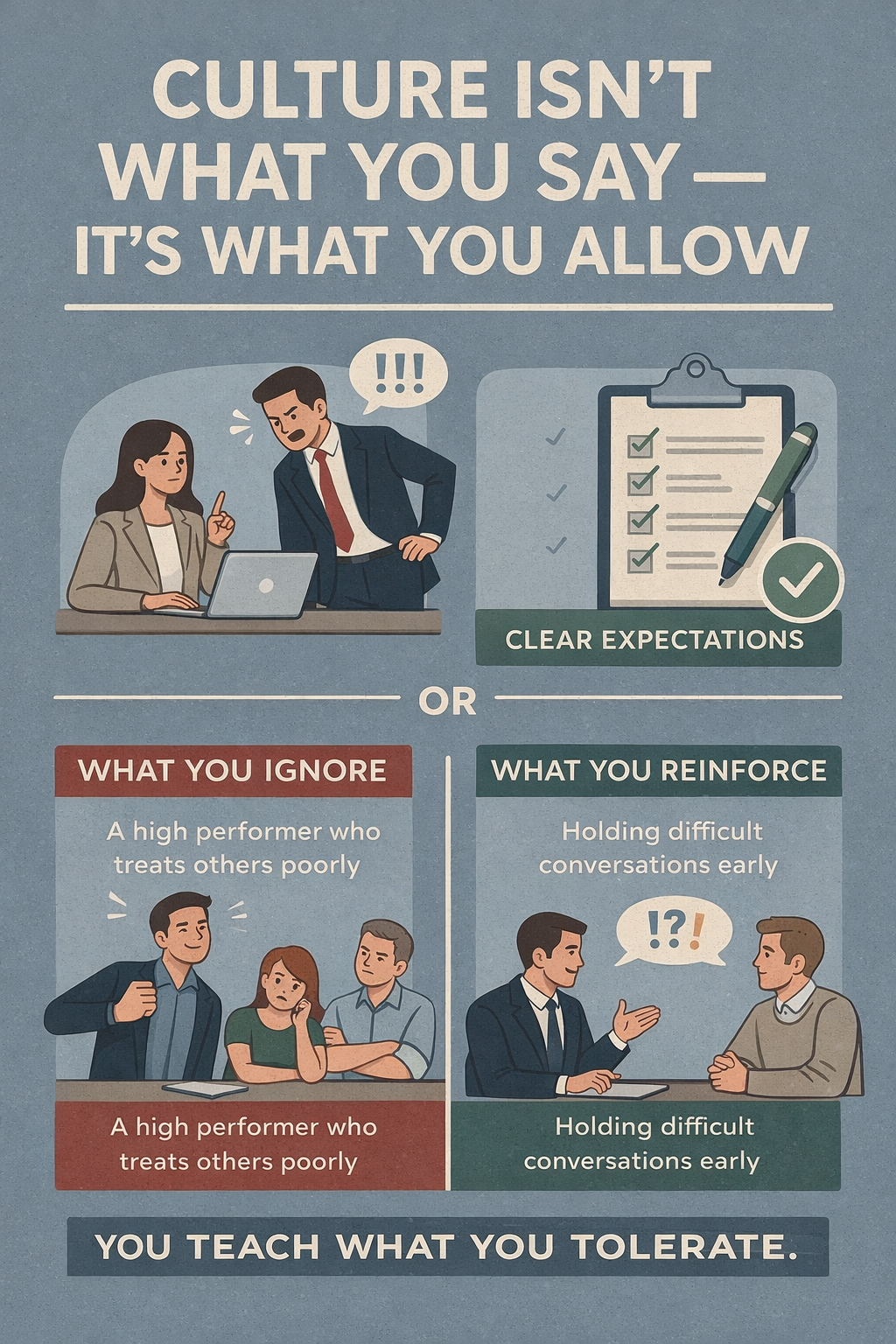
Culture Is What You Allow

Did you ever wonder why some teams thrive while others struggle—even when they have similar talent, tools, and goals?

It’s rarely about strategy alone. It’s rarely about effort.

More often, the difference is culture—the everyday behaviors that are encouraged, ignored, or quietly tolerated.

Read More
Human-Centered Leadership: Leading with Empathy in a Changing World

It was Monday morning, and the quarterly results had just been released. The numbers were strong, but the atmosphere in the office was tense. Sarah, the CEO of a mid-sized tech company, noticed her team members exchanging weary glances. One engineer had been working late nights for weeks, another had quietly withdrawn from meetings, and a project manager looked visibly burned out.

Instead of launching into a celebratory speech about revenue growth, Sarah paused. She asked everyone to share how they were feeling, not just about the work but about themselves. What followed was a candid conversation about stress, balance, and the need for more support. That moment shifted the culture of the company: Sarah’s choice to lead with empathy and curiosity marked the beginning of a human-centered leadership approach.

Read More
Leading Through Change Without Breaking Your Team

When I first stepped into school leadership, I saw myself as a change agent.
In fact, many people expected me to be one.

The board wanted fresh energy.
Parents wanted improvements.
Even some teachers encouraged innovations that would move the school forward.

So, I leaned in.
New programs. New initiatives. New expectations.
I thought this was leadership—spotting what wasn’t working and fixing it, fast.

But what I didn’t fully appreciate was that not everyone was ready.

Read More
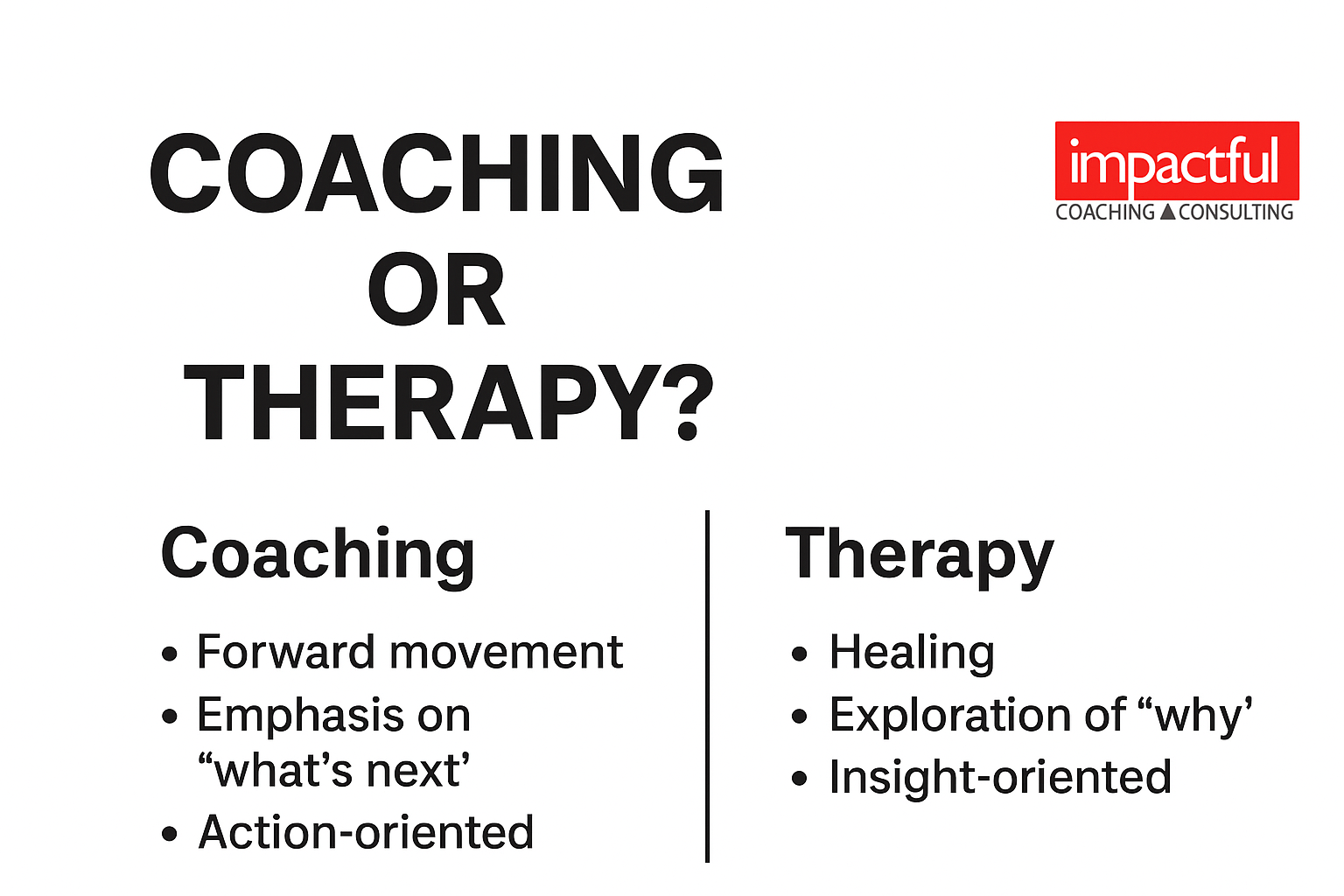
Coaching vs. Therapy: Which to Choose?

Imagine this:

You’re driving home after another long day.
The work isn’t the problem—you’re functioning, you’re capable, you’re respected.
But something feels… off.

You can’t shake the feeling of being stuck.
You’re questioning whether you’re in the right career.
Your motivation is fading.
Your confidence wavers at the worst times.
And the stress that used to roll off your back now lingers.

So you ask yourself:

Do I need a coach… or a therapist?
Which one actually helps me move forward from here?

Read More